
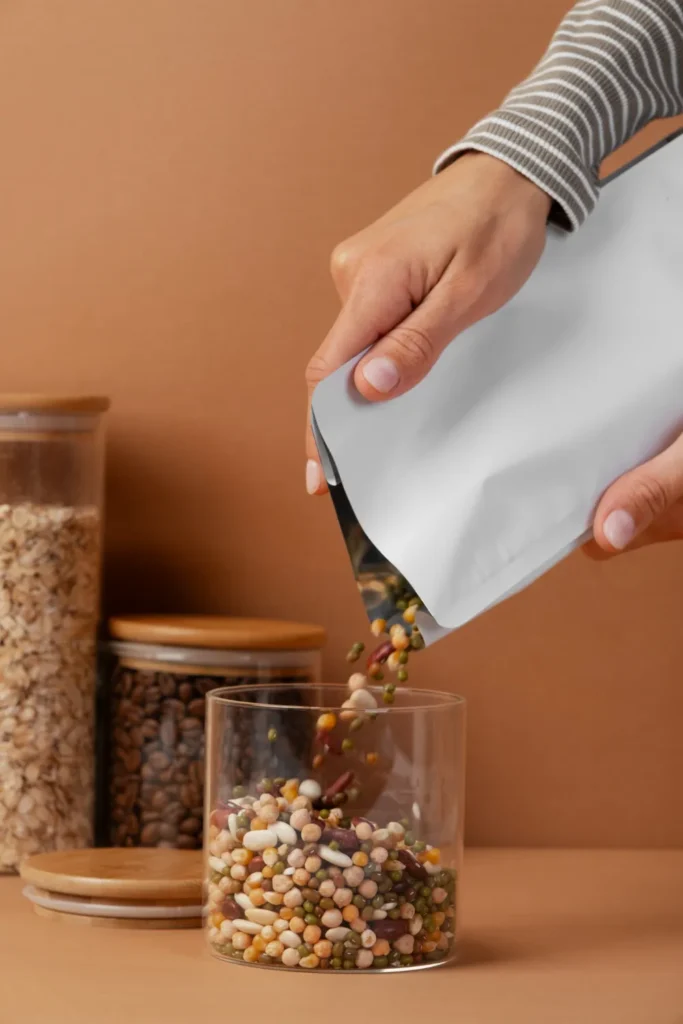
If you’ve ever opened a bag of coffee weeks after buying it and it still smelled fresh, there’s a good chance mylar was doing the work. Custom mylar bags for food and retail packaging have become the go-to choice for brands that need real shelf protection along with shelf appeal, and Mylar Bags Factory is one of the names that keeps coming up when small and mid-size brands start comparing suppliers. This isn’t a coating or a gimmick. It’s a layered film built to block oxygen, moisture, and light, three things that quietly ruin food, supplements, and anything else sensitive to air. We’ll walk through what these bags actually do, what your material options are, what a typical order process looks like, what it costs, and how to pick a supplier who won’t leave you guessing.
What custom mylar bags actually do for your product
Mylar isn’t a single material. It’s usually a laminate: a layer of polyester, a thin layer of aluminum, and an inner sealant layer that bonds shut when heat is applied. Each layer has a job. The polyester gives it strength and puncture resistance. The aluminum blocks light and slows oxygen transfer to a level standard plastic can’t match. The sealant layer is what lets you heat-seal it airtight.
Why does that matter for your product? Oxygen and moisture are the main reasons dry goods go stale, clump, or lose potency. Mylar’s oxygen transmission rate runs far below standard polyethylene or polypropylene film, which is why long-term food storage companies rely on it for grains, powders, and freeze-dried items. Pair a sealed mylar bag with an oxygen absorber and you’re looking at shelf life measured in years instead of months for many dry foods.
Retail brands care about a second thing too: shelf appeal. Mylar takes print well, holds color, and can go matte, glossy, or metallic. So you’re not choosing between protection and looks. You get both in the same bag.
Material and format options: what fits your product
Not every product needs the same build. A spice blend and a bag of frozen vegetables have different needs, and picking the wrong format either wastes money or shortens shelf life. Here’s how the common options stack up.
| Format | Avg. Cost (per 1,000, custom printed) | Best For | Barrier Level | Reseal Option |
| Flat pouch (3-side seal) | $250–$400 | Snacks, samples, low-volume runs | Moderate | No |
| Stand-up pouch (foil laminate) | $400–$700 | Coffee, pet treats, powders | High | Yes, zipper |
| Gusseted mylar bag | $500–$850 | Bulk grains, dry goods, wholesale | High | Yes, heat or zipper |
| Flat-bottom pouch | $600–$950 | Premium retail, shelf-standing display | High | Yes, zipper |
Do you need a resealable zipper, or is a heat seal enough because the product gets used in one sitting? That’s usually the first question worth answering before you touch pricing. Coffee roasters, for example, often add a one-way degassing valve so CO2 can escape without letting oxygen in, which flat pouches without valves can’t do.
Companies like Mylar Bags Factory that work across mylar bags for food and retail packaging tend to stock several base film weights, commonly ranging from 3.5 mil up to 7 mil, so a lightweight snack pouch and a heavy-duty bulk grain bag aren’t built from the same stock.
How the ordering process actually works
Ordering custom packaging can feel like a black box if you haven’t done it before. Here’s roughly what happens between placing an order and getting boxes at your door.
First, you send over your design, or the supplier’s team builds one from your logo and product info. Second, you pick your film structure and size based on product weight and fill volume. Third, a physical or digital proof gets sent for approval before anything goes to press. Fourth, the bags print, typically using flexographic or digital printing depending on order size. Fifth, they’re cut, formed, and shipped, usually within two to four weeks for standard runs.
Rush production exists, but it usually adds 15 to 30 percent to the cost. If a launch date matters, it pays to ask about lead times before you finalize your design, not after.
What drives the cost of custom mylar packaging
Cost isn’t just about bag count. A few variables move the price more than people expect.
Film thickness is one of the biggest factors. A 3.5 mil bag costs less than a 7 mil bag, but it also offers less puncture resistance and a shorter realistic shelf life for the product inside. Print complexity matters too. A one-color design costs far less than a six-color photo-quality print. Order volume brings the per-unit price down fast, which is why most suppliers set tier pricing at 500, 1,000, 5,000, and 10,000 units. Add-ons like zippers, valves, or matte soft-touch coatings each carry their own line item.
According to the Flexible Packaging Association’s 2025 industry report, the value-added segment of the U.S. flexible packaging market, the part that includes printing, laminating, and pouch manufacturing, hit roughly $34.1 billion in 2024, not counting retail shopping bags, storage bags, or trash bags. That kind of scale is part of why per-unit costs have come down over the past decade as more converters compete for the same order volume.
How to choose the right mylar bag supplier
Picking a supplier is where most of the real decisions get made, and it’s easy to focus only on price and miss the details that actually matter later.
Ask about minimum order quantities first. Some suppliers won’t touch anything under 5,000 units, which rules them out for a small brand testing a new product. Ask what film certifications they carry too. Food-grade packaging in the U.S. needs to meet FDA requirements for food contact substances under 21 CFR regulations for indirect food additives, and a supplier who can’t answer that clearly is a red flag.
A general packaging broker might offer a lower quote, but a converter who works specifically in mylar and pouch formats, the kind of specialist Mylar Bags Factory represents, will usually know sealing temperatures, moisture-barrier tradeoffs, and print registration issues that a broker handling ten different packaging types won’t catch until your first bad batch arrives.
“The biggest mistake I see new brands make is choosing film thickness based on price alone instead of what the product actually needs to survive shipping and shelf time,” says a packaging consultant who works with food startups in the Midwest. That’s the kind of detail a specialist supplier flags before you print 10,000 bags, not after.
One food brand we’ve seen go through this: a small-batch granola company started with thin 3.5 mil flat pouches to save money, then switched to 5 mil stand-up pouches with a zipper after customers complained about bags tearing in transit. The switch cost more per unit, but returns dropped and repeat orders went up.
Conclusion
Custom mylar bags for food and retail packaging aren’t a one-size-fits-all product, and the right choice comes down to what you’re storing, how long it needs to stay fresh, and how the bag will hold up between the warehouse and the shelf. A thin flat pouch might be all you need for a low-cost sample run, while a heavier gusseted bag with a zipper makes more sense for anything shipped repeatedly or stored long-term. Talk through your product’s specific needs, fill volume, and shelf life target with your supplier before you commit to a print run. If you want a supplier who works specifically in this format rather than packaging in general, reach out to Mylar Bags Factory and ask them to walk you through material options for your product.
Frequently asked questions
What’s the difference between mylar bags and regular plastic bags?
Mylar bags use a layered film with an aluminum barrier that blocks oxygen and light far better than single-layer plastic. Regular plastic bags let more air and moisture through over time, which shortens shelf life for anything sensitive to oxidation.
How much do custom mylar bags cost for a small business?
For a 1,000-unit order of a basic stand-up mylar pouch with custom print, expect roughly $400 to $700 depending on size, film thickness, and zipper options. Smaller runs under 500 units usually carry a higher per-unit price.
Are custom mylar bags FDA approved for food packaging?
The film itself needs to be made from FDA-compliant food contact substances under 21 CFR. Reputable suppliers can provide documentation showing their food-grade film meets these standards, so it’s worth asking for that paperwork before your first order.
How long does food actually stay fresh in a mylar bag?
It depends heavily on the food and whether an oxygen absorber is used. Dry goods like rice, beans, and pasta sealed with an oxygen absorber can last well over a decade, while items with natural oils or moisture, like nuts or jerky, have a shorter realistic window, often one to three years.
Can mylar bags be resealed after opening?
Yes, if you order them with a zipper closure. Heat-sealed mylar bags without a zipper need to be re-sealed with an iron or dedicated sealer, or transferred to another container after first use.