
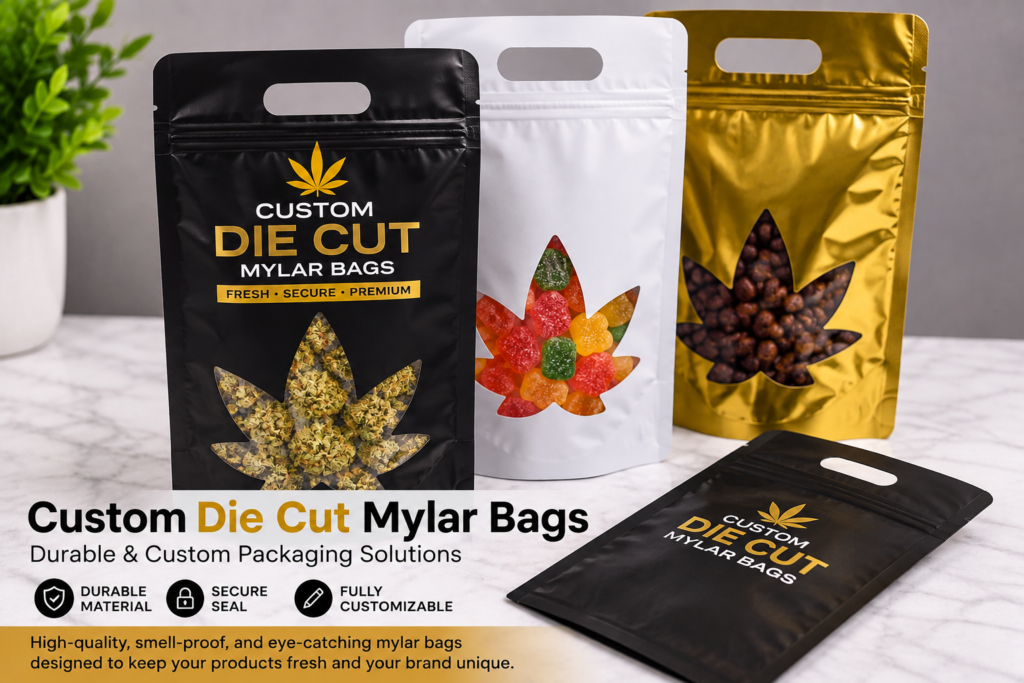
Have you ever picked up a product just because the bag looked different from every other bag on the shelf? That is the power of shape. A pouch cut into a fun outline can turn a plain snack or a small gift into something people want to pick up and hold. This is where custom die cut mylar bags come in, and this guide will walk you through what they are, why brands use them, and how to pick the right one for your product.
At Mylar Bags Factory, we work with small shops and growing brands who want packaging that stands out on a crowded shelf. Whether you sell coffee, candy, pet treats, or bath products, a well shaped bag can say a lot about your brand before a shopper reads a single word on the label. You can browse our full range of custom die cut mylar bags and see the shapes for yourself.
What Are Custom Die Cut Mylar Bags?
A die cut bag is not the plain, square pouch you see everywhere. Instead, a machine cuts the bag into a special shape, such as a house, an animal, a bottle, or a curved top. The word “die” refers to the metal tool used to press and cut the shape from the mylar sheet. Mylar itself is a strong, shiny film made to block light, air, and moisture, so it keeps food and other goods fresh for a long time.
Put those two things together, and you get a bag that is both tough and eye catching. It holds up during shipping, resists tears, and still gives your brand a shape that people remember.
Why Shape Matters More Than You Might Think
Think about the last time you walked down a snack aisle. Rows of flat, square bags can blur together fast. A single bag with a unique die cut outline breaks that pattern right away. Shoppers notice it first, even before the color or the logo.
Research on packaging behavior backs this up. A study published in the Journal of Retailing and Consumer Services found that shoppers form a first impression of a product within seconds, and shape plays a bigger role in that snap judgment than most brands expect (source: Journal of Retailing and Consumer Services, packaging perception research). A separate industry survey by the Paper and Packaging Board reported that roughly 72% of consumers say packaging design influences their choice at the shelf. Numbers like these show that shape and structure are not small details. They are part of how buyers decide what to trust.
Common Uses for Die Cut Mylar Bags
Custom die cut mylar bags work well across many industries. Here is a quick look at how different sectors put them to use.
| Industry | Popular Shape | Main Benefit |
| Coffee & Tea | House shape with valve | Keeps beans fresh, adds rustic look |
| Snacks & Candy | Rounded top pouch | Grabs attention on shelf |
| Pet Treats | Bone or paw outline | Matches the product theme |
| Bath & Beauty | Bottle or wave shape | Feels premium to hold |
| Herbal & Wellness | Leaf or arch shape | Shows a natural, calm brand feel |
As you can see, the shape is not just for looks. It often supports the story a brand wants to tell.
What Goes Into a Strong Die Cut Bag
Getting a die cut mylar bag right takes more than picking a fun outline. A few parts work together to make the final product hold up and look sharp:
- Material thickness. Thicker mylar handles rough shipping better and blocks more light and moisture.
- Seal strength. A weak seal can let air in, which spoils food fast. We test seals so your product stays sealed shut.
- Print quality. Bright, sharp printing on a die cut shape makes the whole bag pop under store lights.
- Finish options. Matte, gloss, or soft touch coatings each give a different feel in the hand.
- Closures. Zip locks, tin ties, or valves add function on top of good looks.
Skip any one of these, and the bag may look nice in a photo but fail once it hits a delivery truck or a store shelf.
How We Help Brands Get It Right
Many small brands come to us after trying a generic supplier and getting bags that tear, fade, or arrive in the wrong size. We build custom die cut mylar bags around your product first, not the other way around. That means we ask about your product weight, storage needs, and shipping method before we ever cut a shape.
One client, a small coffee roaster, switched from a plain pouch to a house shaped die cut bag with a one way valve. Their online sales grew because customers said the bag felt “hand made” even though it came off a machine. Small design choices like this often carry more weight with buyers than a company expects. You can see how our die cut mylar bag services are built to match a product this closely.
Simple Steps to Order Your Own
If you are new to custom packaging, the process is easier than it sounds. Here is how it usually goes:
- Share your product details, size, and rough budget with our team.
- Pick a base shape or ask us to design one for your brand.
- Choose material thickness, finish, and closure type.
- Review a proof before full production starts.
- Approve the final design and set a print run.
Most first time buyers finish this in a single week once samples are approved. Fast turnaround matters when you are trying to hit a launch date or restock a bestseller.
A Quick Word From the Packaging Side
Packaging engineers often point out that shape and barrier strength should never work against each other. A striking die cut outline is only as good as the seal that holds it together. That is why our team checks both the visual design and the physical build of every custom die cut mylar bag before it ships out. Good looks and strong protection need to arrive in the same bag, every time.
Conclusion
Custom die cut mylar bags give small and growing brands a real way to stand out without a huge budget. A well planned shape catches the eye, a strong mylar build keeps products fresh, and smart print choices tell your brand story at a glance. From coffee roasters to pet treat makers, brands across many fields use these bags to build trust before a shopper even reads the label. If you want packaging that works as hard as your product does, a custom shape may be the simplest upgrade you can make this year.
What is the difference between a die cut mylar bag and a regular pouch?
A regular pouch keeps a plain square or rectangle shape, while a die cut bag gets pressed into a custom outline, such as a house, animal, or curved top. The die cut version often costs a little more because of the extra tooling step. In return, it usually stands out far more on a shelf and can match your brand shape or logo.
How long do mylar bags keep products fresh?
Mylar film blocks light, air, and moisture better than most plastic films, so it can keep dry goods fresh for many months when sealed well. The exact time depends on the product inside, the seal quality, and how the bag is stored. Cool, dry storage always helps extend shelf life further.
Can small businesses order custom shapes in low quantities?
Yes, many suppliers, including our team, offer smaller print runs for new or growing brands. This lets you test a shape and design before committing to a large order. It also keeps upfront costs lower while you learn what your customers respond to best.
Are these bags safe for food products?
Most mylar bags used for food are made with food grade layers that meet safety standards for direct contact. It is still smart to confirm the exact material grade with your supplier based on what you plan to pack. This step protects both your customers and your brand reputation.
How do I choose the right shape for my brand?
Start by thinking about what your product represents and who buys it, since the shape should support that story. A pet brand might lean toward a paw shape, while a tea brand might choose a soft leaf outline. Testing a shape with a small focus group or trusted customers can also guide the final choice.
What closures work best with die cut mylar bags?
Zip locks work well for products customers reopen often, such as snacks or pet treats. Tin ties give a simple, rustic feel that suits coffee or baked goods. One way valves are best for items like coffee beans that release gas after packing, since they let air out without letting air back in.