
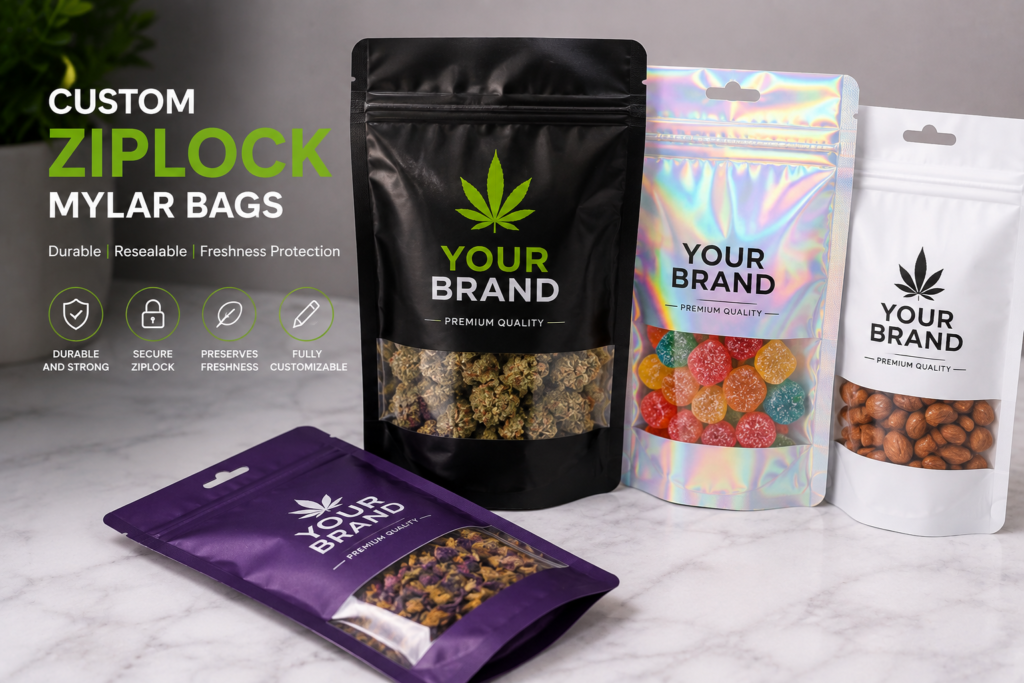
Have you ever opened a bag, used half of it, and then struggled to close it back up? A weak seal can ruin a good product fast. Once air gets in, freshness goes down and customers notice right away. This is the exact problem that custom ziplock mylar bags are built to solve, and this guide will show you why they work so well and how to choose the right one for your product.
At Mylar Bags Factory, we hear from brand owners every week who are tired of flimsy seals that pop open in shipping boxes or on store shelves. A bag that reseals well tells a customer that a product still matters after the first use. You can look through our full line of custom ziplock mylar bags and see the print and size options for yourself.
What Makes a Ziplock Mylar Bag Different
A ziplock mylar bag combines two simple ideas. First, mylar film blocks light, air, and moisture far better than thin plastic. Second, a built-in zip track lets a buyer open and close the bag many times without breaking the seal. Put together, you get a pouch that protects a product from the first use to the last.
This matters most for products people use over several days or weeks, such as coffee, snacks, pet food, or bath salts. A one-time seal works fine for a single use item, but it fails a repeat-use product almost every time.
Why Reseal Strength Changes Buying Habits
Think about your own kitchen cabinet for a second. Which bags do you reach for again and again? Most people pick the ones that still close tight after the first open. A study from the Flexible Packaging Association found that resealable features rank among the top three reasons shoppers pick one snack or pet food bag over another, right behind price and taste or ingredients. A separate consumer report by Mintel noted that close to 60% of shoppers said they would pay a little more for packaging that keeps food fresh longer after opening.
Numbers like these show that a strong zip closure is not a small extra. It shapes whether a customer buys your product again next month.
Where Ziplock Mylar Bags Fit Best
Certain products gain the most from a ziplock design. Here is a simple breakdown of common fits.
| Product Type | Why Ziplock Helps | Common Add-On |
| Coffee & Loose Tea | Keeps aroma locked in between pours | One way valve |
| Snack Foods | Stops staleness after first open | Clear window |
| Pet Treats | Handles daily reopening without tearing | Bottom gusset |
| Bath Salts & Herbs | Keeps moisture out during storage | Matte finish |
| Supplements & Powders | Protects from air exposure | Tamper strip |
As the table shows, almost every product that gets opened more than once benefits from a working zip track.
The Parts That Make a Zip Seal Actually Work
A ziplock bag can look fine in a photo and still fail in real life if a few details get skipped. We pay close attention to:
- Track alignment. A crooked zip track will not line up right, and buyers will feel it every time they close the bag.
- Film thickness. Thin film around the zip area tears fast, especially with daily reopening.
- Seal strength at the sides. The bottom and side seams need to hold as firmly as the zip itself.
- Print placement. Good design keeps labels and text clear of the zip line so nothing gets cut off or hidden.
- Bag size to product ratio. A bag too big for its contents makes the zip harder to reach and close fully.
Skip any of these steps, and a customer may blame your product for going stale when the real issue was the bag.
A Real Example From Our Work
One of our clients, a small pet treat brand, used a plain fold-over bag for over a year. Customers kept writing in that treats went soft within a few days of opening. We switched them to a custom ziplock mylar bag with a wider zip track sized for a scoop to fit through easily. Return complaints about stale treats dropped within the next production run, and the brand told us repeat orders picked up as well. Small changes to the seal often matter more to buyers than flashy print work.
Steps to Order Your Own Ziplock Bags
Getting started is simpler than most first-time buyers expect. Here is the usual path our clients follow:
- Tell us your product type, weight, and rough order size.
- Pick a bag size and decide on a clear window, matte, or gloss finish.
- Choose extra features like a valve, gusset, or tear notch.
- Approve a design proof before we print your full run.
- Confirm the final order and set a delivery date.
Most brands move from first message to finished samples within about a week, which helps a lot when you are working against a launch date.
What Packaging Experts Say About Reseal Design
Packaging engineers often stress that a zip closure only earns its keep if it survives repeat use, not just a single open and close in a lab test. That is why our production team checks zip strength across multiple open cycles, not only on the first try. A bag that seals well once but fails by the fifth open costs a brand more in complaints than it ever saves in production cost.
Conclusion
Custom ziplock mylar bags give brands a simple way to protect a product long after the first open, and that protection builds trust with buyers over time. A strong zip track, the right film thickness, and smart sizing all work together to keep snacks, pet treats, and other goods fresh use after use. Brands that skip these details often see complaints climb, while brands that get the seal right see buyers come back. If your current packaging leaves customers fighting with a bag that will not close, a custom ziplock design is one of the easiest upgrades to make.
What is the difference between a ziplock mylar bag and a heat sealed bag?
A heat sealed bag closes for good once it is sealed, so a buyer has to cut or tear it open, with no way to reclose it fully. A ziplock version adds a plastic track above the seal line so the bag can open and close many times. This makes ziplock options a better fit for products used over several days rather than all at once.
How many times can a zip track be opened and closed?
A well made zip track can typically handle daily use for weeks without losing its grip, though the exact number depends on film thickness and track quality. Cheaper, thin tracks may start to loosen after just a handful of uses. Testing a sample bag with your actual product is the best way to check real-world performance.
Do ziplock mylar bags work for both food and non-food items?
Yes, these bags work well for food products like snacks and coffee as well as non-food items such as bath salts, small parts, or craft supplies. For food use, it is best to confirm the film meets food contact safety standards. Non-food items generally have more flexibility in material choice.
Can I add a clear window to a ziplock bag?
Yes, a clear window is a common add-on that lets buyers see the product without opening the bag first. This works well for snacks, dried fruit, or treats where color and texture help sell the product. The window can be sized small or large depending on how much of the product you want visible.
Is a wider zip track better than a narrow one?
A wider zip track is usually easier to open and close, especially for products scooped out with a spoon or hand, since fingers have more room to grip. Narrow tracks can work fine for lighter products but may feel harder to manage for older buyers or larger hands. Matching track width to how the product gets used makes a real difference in customer satisfaction.