
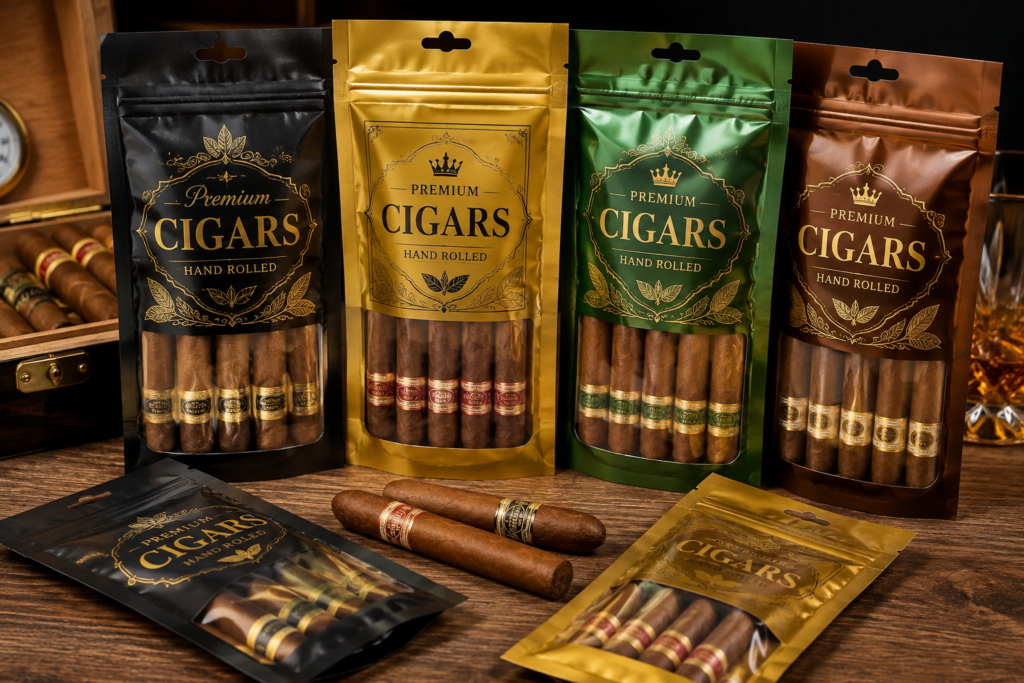
If you sell or store cigars, you already know how much air, moisture, and light can hurt them. A cigar that dries out loses its taste. A cigar that gets too much moisture can grow mold. This is why so many cigar makers, shops, and home collectors now turn to Custom Cigar Mylar Bags to keep their product safe from the moment it’s rolled to the moment it’s smoked.
Mylar Bags Factory makes packaging built for this exact job. We work with cigar brands, small shops, and lounges who need bags that hold humidity levels steady, block out light, and still look sharp on a shelf or in a gift box. In this article, we’ll walk through why Custom Cigar Mylar Bags matter, what to look for when picking one, and how they compare to older packaging methods.
Why Cigars Need Better Protection Than a Box
Wood boxes and paper wraps have been used for cigars for a long time. But they were never built to fully block air or moisture. Once a box is opened and closed a few times, the seal weakens. Humidity swings inside the box, and the cigars inside start to change.
Have you ever opened an old cigar box and noticed the wrapper felt dry or cracked? That’s air getting in over time. Custom Cigar Mylar Bags solve this problem in a simple way: they create a tight seal around each cigar or bundle, so outside air has a much harder time reaching the tobacco.
This matters for three main reasons:
- Freshness stays locked in for longer periods of storage or shipping.
- Light stays out, which protects the wrapper leaf from fading.
- The bag adds a barrier against bugs and small pests that damage stored tobacco.
What Makes a Mylar Bag Different From Regular Plastic
A regular plastic bag might look similar at first glance, but the material inside is not the same. Mylar is a layered film, often paired with foil, that blocks oxygen and moisture far better than plain plastic. For cigars, that difference decides whether a product tastes right months later or tastes flat and stale.
Here’s a quick comparison to show the gap between common packaging choices for cigars.
| Packaging Type | Moisture Barrier | Light Block | Shelf Life Support | Reusable Seal |
| Paper Wrap | Weak | None | Short | No |
| Wood Box (unsealed) | Moderate | Partial | Medium | No |
| Plain Plastic Bag | Weak to Moderate | Low | Short to Medium | Sometimes |
| Custom Cigar Mylar Bags | Strong | High | Long | Yes, with zip or heat seal |
As the table shows, Custom Cigar Mylar Bags hold a clear edge in almost every category that matters to a cigar seller or collector. This is one reason more shops are switching over, even for smaller batch runs.
Custom Sizing and Branding Options
One thing cigar brands ask about often is whether they can print their own logo or design on the bag. The answer is yes. A mylar pouch can be sized for a single cigar, a bundle of five, or a full box replacement, and the outside can carry full color printing, a matte or glossy finish, and even a small window so buyers can see the product before opening it.
This matters for two groups of buyers:
Retail shops want packaging that looks good on a shelf and builds trust with new customers. A clean, printed bag signals that the product inside was handled carefully.
Gift buyers and collectors often keep the packaging itself, especially for limited runs or specialty blends. A well-made bag adds to that experience instead of taking away from it.
Does Sealed Packaging Really Change Shelf Life?
This is a fair question to ask before switching your packaging. Research on barrier packaging for tobacco and other moisture-sensitive goods has shown that low-oxygen, sealed environments slow down the breakdown of organic material by a wide margin compared to open-air storage. A study published by the Journal of Food Science, which looked at similar barrier film applications for perishable organic goods, found that oxygen-blocking films reduced product degradation rates by more than 60 percent compared to standard plastic storage over the same time period.
Separately, packaging industry data from the Flexible Packaging Association has pointed out that barrier films like mylar are now used in more than half of specialty food and tobacco storage products sold in North America, largely because they extend usable shelf life without added preservatives. For cigar makers, that kind of protection means fewer returns, fewer complaints about dried-out product, and a better experience for the end buyer.
How Mylar Bags Factory Approaches Cigar Packaging
Every cigar brand has different needs. Some want a plain, heavy-duty pouch built only for shipping. Others want a fully branded retail bag with a resealable zip top. Because of this, we build each order around the size, seal type, and print style the customer actually needs, rather than pushing one fixed template on every order.
We also pay attention to seal strength. A bag that looks sealed but opens easily under light pressure isn’t doing its job. Every batch goes through checks for seal quality before it ships out, so shop owners and cigar makers can trust the bag will hold up during transport and storage.
If your shop or brand is weighing a move to sealed pouches, it often helps to start with a small trial batch, test it against your current packaging over a few weeks, and compare how the cigars hold their moisture and smell.
Conclusion
Cigars are sensitive to air, light, and moisture in ways that older packaging methods were never built to handle well. Custom Cigar Mylar Bags give cigar shops, brands, and collectors a practical way to keep product fresh for longer, protect flavor, and present a cleaner look on shelves or in gift packaging. With options for custom sizing, printing, and seal types, this kind of packaging fits both small specialty runs and larger retail operations. For anyone tired of dealing with dried-out or damaged stock, switching to sealed mylar packaging is a change worth testing.
Frequently Asked Questions
How long do cigars stay fresh in a sealed mylar bag? This depends on how the bag is sealed and stored, but a properly sealed bag kept away from heat and direct sunlight can keep cigars in good condition for many months. The tight barrier slows down the drying process that normally happens when air keeps reaching the tobacco. Storage temperature still plays a role, so a cool, steady spot works best even with a sealed bag.
Can small cigar shops order custom printed bags in low quantities? Yes, many packaging suppliers offer smaller batch runs so shops don’t need to commit to large orders right away. This is helpful for shops testing a new blend or trying out packaging changes before scaling up. Ask about minimum order amounts before placing your first batch, since these can vary between suppliers.
Do these bags work for shipping cigars long distances? Sealed pouches are often a strong choice for shipping because they hold moisture levels steady during transit, when temperature and humidity can shift a lot. A tight seal also protects against small punctures or rough handling during delivery. Many shops pair the bag with a rigid outer box for extra protection while shipping.
What’s the difference between a heat seal and a zip seal on these bags? A heat seal is permanent once closed, so it’s often used for single-use shipping or storage until the bag is opened. A zip seal allows the bag to be opened and resealed several times, which works well for retail bags meant to be reopened by the buyer. The right choice depends on whether the bag needs to stay sealed once or get reused.
Are printed cigar bags more expensive than plain packaging? Printing does add some cost compared to a plain bag, but the difference is often smaller than expected, especially at moderate order sizes. Many shop owners find the branding value worth the small added cost, since it helps their product stand out. Getting a quote based on your exact size and print needs is the best way to know the real cost difference.