
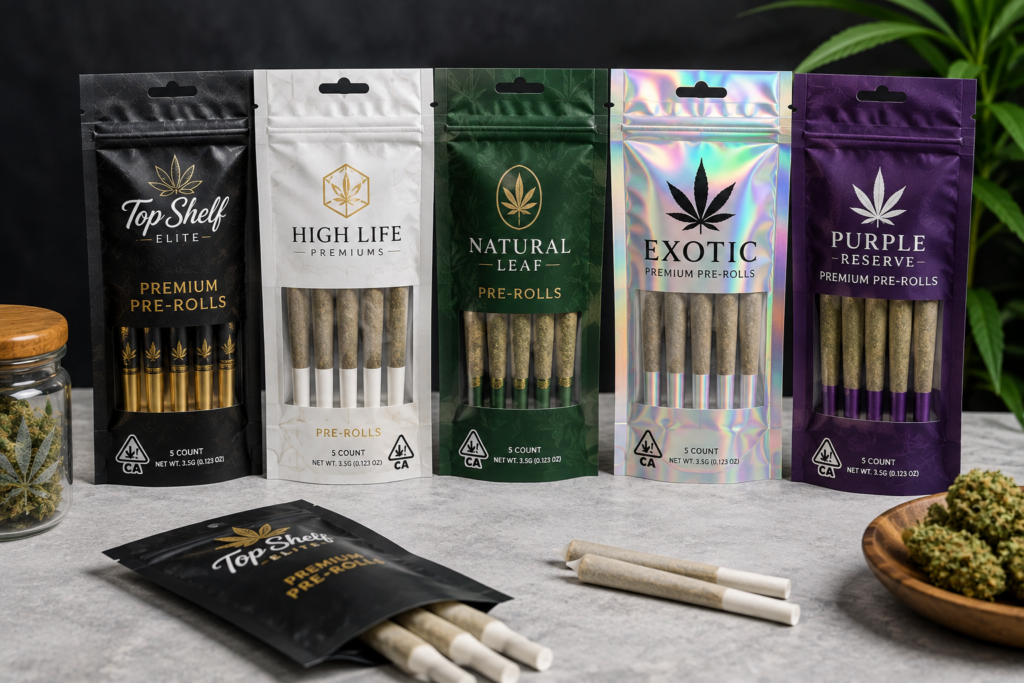
Pre-rolls dry out fast. Anyone who has left one sitting on a counter for a few days knows how quickly the smell fades and the texture turns brittle. This is a real problem for shops and brands, since a dried-out pre-roll doesn’t burn the same way, doesn’t taste the same, and doesn’t leave a good impression on a buyer. That’s why more sellers now pack their pre-rolls in Pre Roll Packaging Mylar Bags instead of paper tubes or thin plastic sleeves.
Mylar Bags Factory builds this kind of packaging for brands who care about how their product holds up between the time it’s rolled and the time it’s sold. Below, we’ll look at why moisture control matters so much for pre-rolls, what sets mylar apart from other options, and how shops can pick the right size and seal for their line.
Why Pre-Rolls Break Down So Quickly
A pre-roll is made mostly of ground flower wrapped in thin paper. That paper is not built to hold moisture in. Once the flower’s natural moisture starts to leave, the paper follows right behind it, and the whole thing gets dry, harsh, and less smooth to smoke.
Have you ever wondered why some pre-rolls still smell strong weeks after they were made while others go flat within days? The answer usually comes down to how they were packed, not how they were rolled. A tight, sealed bag slows down moisture loss and keeps the smell locked inside until the buyer opens it themselves.
There are three main things a good pre-roll bag needs to control:
- Moisture, so the roll doesn’t dry out or turn brittle.
- Smell, so it stays contained until the bag is opened.
- Light, since UV exposure breaks down the compounds that give flower its color and strength.
How Mylar Compares to Tubes and Plastic Sleeves
Plastic tubes are common in this space, and they do offer some crush protection. But most tubes still let small amounts of air pass through the cap over time, and they rarely block light unless they’re tinted. Thin plastic sleeves are even weaker, since they usually rely on a fold-over top rather than a true seal.
Here’s how the common options stack up against each other for pre-roll storage.
| Packaging Type | Moisture Barrier | Odor Control | Light Block | Reseal Option |
| Paper Tube | Weak | Low | None | No |
| Clear Plastic Sleeve | Weak to Moderate | Low to Moderate | None | Fold only |
| Tinted Plastic Tube | Moderate | Moderate | Moderate | Twist cap |
| Pre Roll Packaging Mylar Bags | Strong | High | High | Yes, zip or heat seal |
Based on this table, sealed mylar pouches hold a clear lead in odor control and moisture protection, which are the two biggest complaints buyers have about pre-rolls that sat too long before purchase.
Custom Features Shops Ask For Most
Brands rarely want a plain bag. Most ask for a resealable zip top, a matte finish, and space for a logo, batch number, or strain name. Some also request a small tear notch so buyers can open the bag without needing scissors, which sounds small but matters a lot for repeat customers who want an easy experience.
Child-resistant closures come up often too, especially for shops in states with strict packaging rules. A mylar bag can be built with a child-resistant zip that still holds a full seal against air and moisture, so shops don’t have to choose between compliance and freshness.
We work with each brand to figure out the right size, whether that’s a single pre-roll pouch, a multi-pack bag, or a larger pouch built for bulk pre-roll orders headed to other retailers.
What the Research Says About Barrier Packaging
This isn’t just a guess based on customer feedback. A packaging study from the Journal of Applied Polymer Science looked at moisture vapor transmission rates across common film types and found that multi-layer barrier films, the kind used in mylar pouches, allowed less than a tenth of the moisture loss seen in standard single-layer plastic over the same storage period.
Separately, a market report from the Flexible Packaging Association noted that demand for barrier pouches in the cannabis and hemp packaging sector grew by double digits year over year, largely driven by brands trying to cut down on customer complaints tied to dried-out product. For shop owners watching return rates or online reviews, this kind of data lines up with what many already notice on the shelf: sealed bags simply hold product quality longer than open or loosely sealed containers.
Getting the Sizing and Seal Type Right
Picking the wrong bag size is one of the most common mistakes we see. A bag that’s too large leaves extra air inside, which works against the whole point of sealing it in the first place. A bag that’s too tight can crush a delicate pre-roll during shipping or handling.
Because of this, we recommend brands send us a sample pre-roll, or exact measurements, before locking in a bulk order. This one step saves a lot of back-and-forth later and helps avoid a reprint. Seal type matters just as much. Heat-sealed bags work well for single-use retail packs, while zip seals suit multi-packs meant to be opened and closed more than once.
Conclusion
Pre-rolls lose their freshness fast once they’re exposed to open air, and paper tubes or loose plastic sleeves rarely stop that from happening. Pre Roll Packaging Mylar Bags give brands and shops a practical way to lock in moisture, control odor, and block light, all while offering room for custom branding and child-resistant options where needed. Getting the size and seal type right makes a real difference in how a product performs from the moment it’s packed to the moment a customer opens it.
Frequently Asked Questions
How much longer do pre-rolls stay fresh in a sealed mylar bag compared to a tube? This varies by storage conditions, but a properly sealed bag can keep a pre-roll in better shape for several weeks longer than an open tube left at room temperature. The tight barrier slows the moisture loss that causes flower to dry and harden. Keeping the sealed bag away from direct heat and sunlight adds even more protection on top of that.
Can these bags be made child-resistant for stores that require it? Yes, a mylar pouch can include a child-resistant zip closure while still holding a full seal against air and light. This is a common request from shops operating in areas with strict packaging laws. It’s worth confirming the exact compliance standard needed in your region before placing a bulk order.
What size bag works best for a single pre-roll versus a multi-pack? A single pre-roll usually needs a narrow, close-fitting bag so there isn’t extra room for air to build up inside. Multi-packs need a slightly larger bag with enough space to hold several rolls without crushing them during handling. Sending exact measurements or a sample before ordering helps avoid a size that’s too loose or too tight.
Do printed bags cost much more than plain ones? Printing adds some cost, but the gap is usually smaller than people expect, especially once order size increases. Many brands find that a printed, branded bag helps their product stand out on a shelf next to competitors in plain packaging. Getting a quote based on your exact bag size and print details is the clearest way to compare pricing.